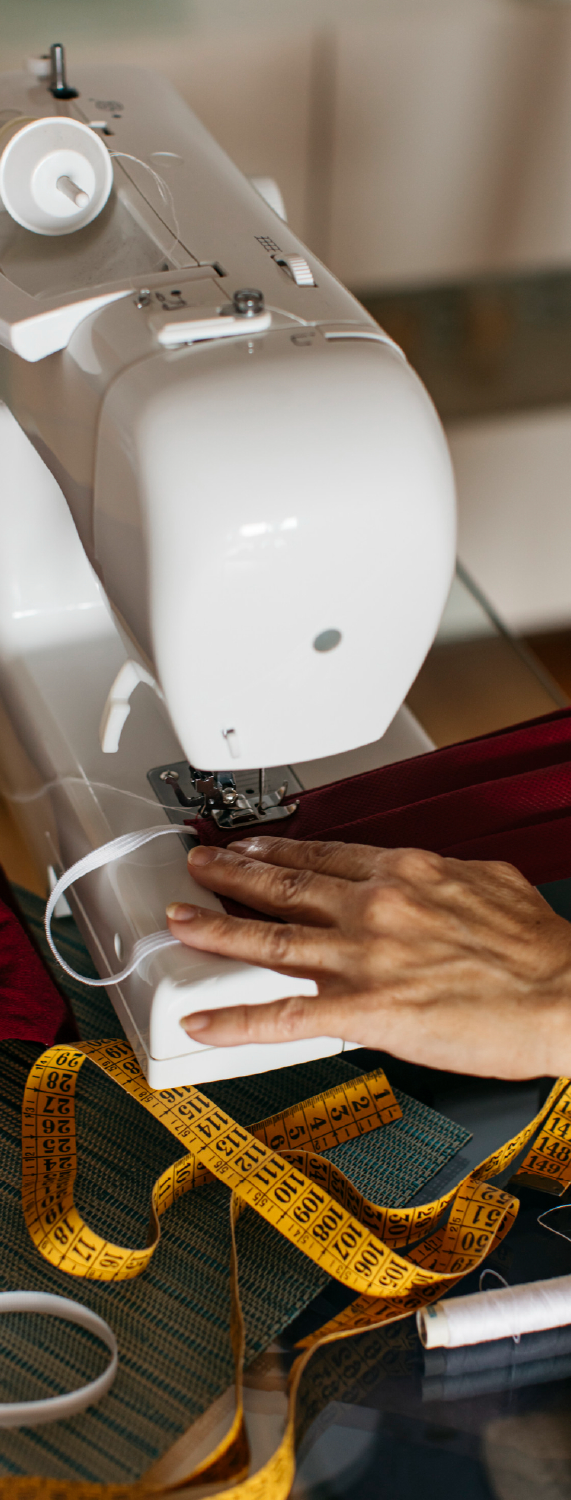
A sewing machine is an indispensable tool in any textile production, workshop or even at home. The quality of sewing, productivity and ease of use depend on choosing the right model. Let's consider the main types of sewing machines, them features, as well as the rules maintenance.
Types of sewing machines
Household (home) sewing machines
Designed for amateur or infrequent use.
They have basic functions: straight stitch, zigzag, buttonhole.
Easy to control, ideal for beginners.
Industrial sewing machines
Powerful, durable, designed for continuous operation.
They perform one or more specialized operations: stitching, overlocking, overlocking.
Suitable for mass production.
Electronic and computerized machines
They have advanced functionality, a screen, and stitch pattern memory.
Ideal for creative work, embroidery, quilting.
Overlocks and coverlocks
An overlocker trims and finishes the edge of the fabric at the same time.
A coverlocker combines the functions of an overlocker and a sewing machine.
Indispensable for knitwear and stretch fabrics.
Features of sewing machines
Number of operations: From 5 to 500+ in computer models.
Type of shuttle: vertical or horizontal.
Fabric supply: straight or differential (in overlocks).
Sewing speed: household - up to 800 stitches/min, industrial - up to 5000.
Maintenance
To ensure that the machine works for a long time and without failures, it is important to carry out regular maintenance:
Cleaning from dust and threads
Do this after every 5–10 hours of sewing.
Especially around the shuttle and the fabric feed teeth.
Lubrication of moving parts
Once a month or according to manufacturer's instructions.
Use only special sewing oil.
Adjusting the thread tension
Depends on the type of fabric and thread.
Needle check
Change after each new project or every 8–10 hours of work.
Periodic diagnostics
It is recommended to contact a service center every 6–12 months, especially for industrial machines.
Conclusion
Choosing the right sewing machine depends on your needs, fabric type, and frequency of use. Regular maintenance extends the life of your equipment and ensures quality, trouble-free sewing.
Select the fields to be shown. Others will be hidden. Drag and drop to rearrange the order.
 English
  Ukrainian